Marriage BioData is changing with the times. Initially, Marriage BioData was just an informational document used primarily to share any basic data via Relatives and Family networks. Today, Marriage BioData is a Formatted Profile used to project one’s Personality, Clarity Of Purpose, and the Serious Consideration of Marriage.
Here’s an Article that summarizes the difference between the Old Marriage BioData Comparison to Modern Marriage BioData; the Clear Side-By-Side Comparison Helps you determine which of the two formats is more Appropriate for your Needs.
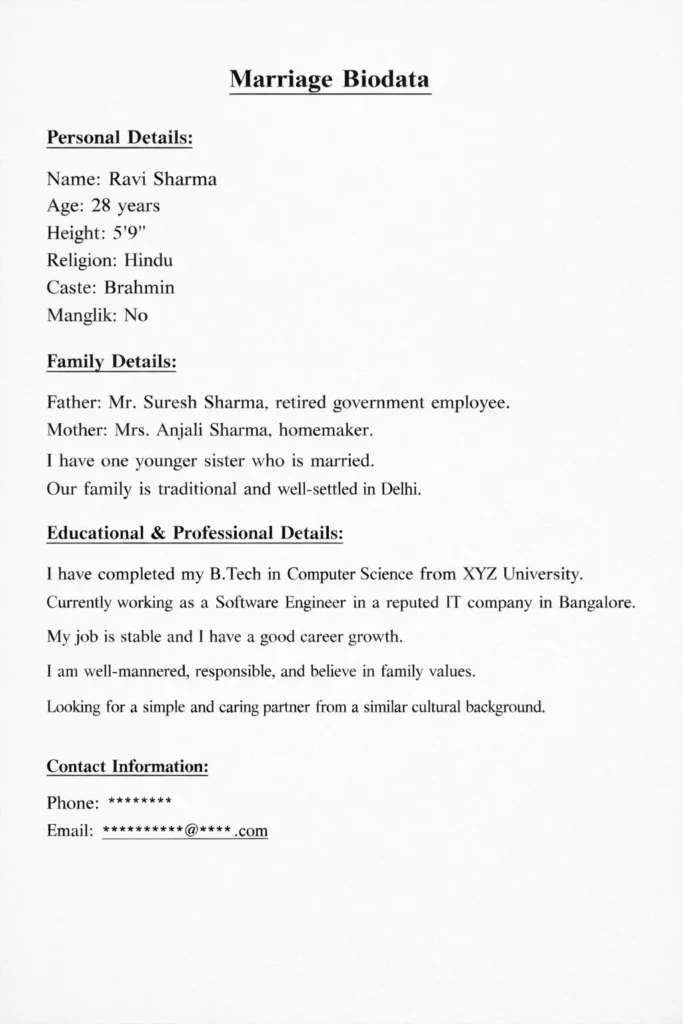
Old-style marriage biodata formats were simple, effective, and functional. Old-style marriage biodata was usually made in word processing programs (MS Word) or handwritten on plain paper and given to the family as a printed document. Some examples of the features of old-style marriage biodata are:
A plain-text format.
Long-running paragraphs.
Limited layouts (example: no specific photo attachment).
Very little description about the individual’s personal details.
Received via postal mail or via email attachment.
What is a Current Modern Marriage Biodata?
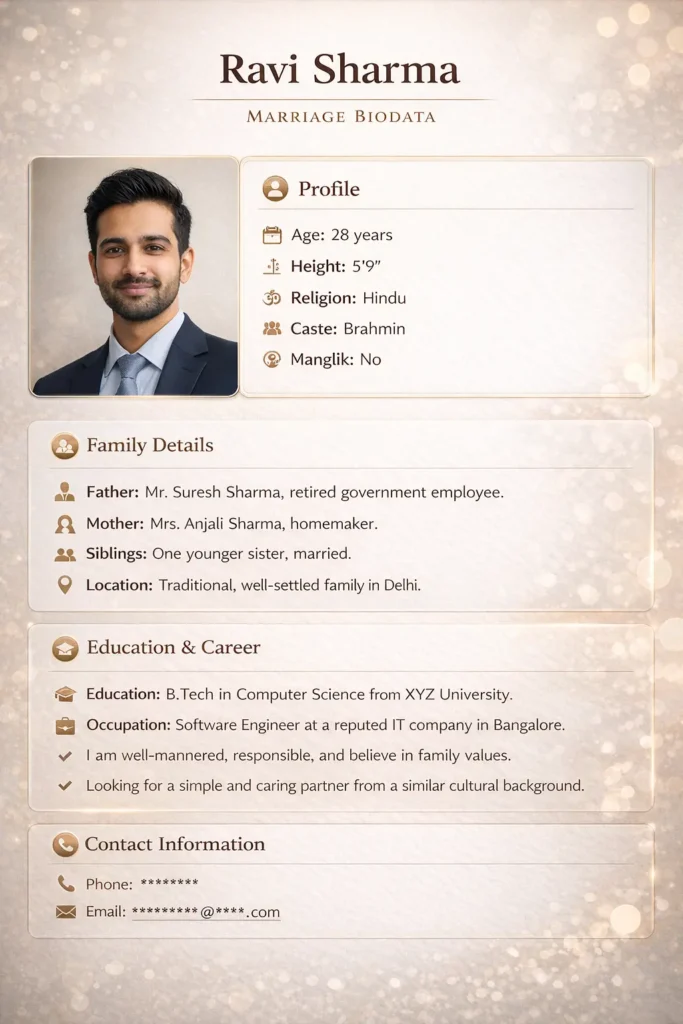
A modern marriage biodata looks neat and clear, both in design and presentation. It is created with a professional template and is saved digitally or printed out as needed. Some important characteristics of a modern marriage biodata include:
Sections that are separated by topic or area
A simple and neat layout
A font that is consistent, professional, and legible
Seprate are for Pictures
Templates that allow for making changes easily
Quick and easy access for sharing via email or WhatsApp
Both information and presentation are key points to be included in creating a modern marriage biodata.
Old vs Modern Marriage Biodata – Detailed Comparison
1. Design & Appearance
Old Marriage Biodata
Modern Marriage Biodata
Old biodata formats are usually plain text documents created in Word or handwritten. They lack visual balance, proper spacing, and consistency. Fonts are often random, and there is no clear layout, which makes the biodata look dull and outdated.
Modern biodata uses clean, elegant designs with proper spacing, alignment, and typography. Sections are clearly separated, and the layout looks calm, organized, and professional. This makes the biodata visually appealing and easier to trust at first glance.
2. Structure of Information
Old Marriage Biodata
Modern Marriage Biodata
Information is written in long paragraphs where personal, family, and career details are mixed together. Families need to read the entire biodata carefully to find important details, which takes time and effort.
Details are divided into clear sections such as personal information, family background, education, profession, lifestyle, and partner preferences. This structured format helps families understand everything quickly without confusion.
3. Readability
Old Marriage Biodata
Modern Marriage Biodata
Because of long paragraphs and poor formatting, old biodata takes more time to read and understand. Important details can be missed easily.
Modern biodata is designed for quick scanning. Families can understand all key details within seconds, which is important when they are reviewing multiple biodata at once.
4. Photo Placement
Old Marriage Biodata
Modern Marriage Biodata
Photos are often missing or pasted separately, sometimes even attached as a loose print. This creates inconsistency and looks unplanned.
Modern biodata includes a dedicated photo section with proper size, alignment, and positioning. The photo becomes a natural part of the biodata and creates a positive first impression.
5. Personal Touch
Old Marriage Biodata
Modern Marriage Biodata
Old biodata focuses only on facts like name, age, and education. It often lacks personality and feels very formal or robotic.
Modern biodata includes a small personal section that highlights interests, values, hobbies, or life goals. This helps families connect emotionally and understand the person beyond basic details.
6. Family Information
Old Marriage Biodata
Modern Marriage Biodata
Family details are usually limited or written briefly, sometimes only mentioning father’s name. This leaves families with many unanswered questions.
Modern biodata has a clear family section that includes parents’ occupation, siblings, family values, and background. This builds trust and transparency, which are very important in arranged marriages.
7. Partner Preference Section
Old Marriage Biodata
Modern Marriage Biodata
Partner preferences are often missing or written in a very short, rigid manner. This can create confusion or misunderstandings.
Modern biodata clearly explains partner expectations using polite and respectful language. It helps families understand compatibility without sounding demanding.
8. Updating Information
Old Marriage Biodata
Modern Marriage Biodata
If anything changes, the entire biodata must be rewritten or retyped. This discourages regular updates.
Modern biodata is editable anytime. You can update job details, location, or photo easily without creating a new document from scratch.
9. Sharing & Accessibility
Old Marriage Biodata
Modern Marriage Biodata
Old biodata is mainly printed and shared physically or sent through email, which takes time and effort.
Modern biodata can be shared instantly via WhatsApp, email, or PDF. It works perfectly on mobile devices, making it easy for families to forward and review.
10. First Impression
Old Marriage Biodata
Modern Marriage Biodata
While traditional, old biodata often looks outdated and less prepared, especially when compared with modern profiles.
Modern biodata looks professional, serious, and well-prepared. It creates a strong first impression and increases the chances of getting a positive response.
While old biodata formats still exist, modern biodata aligns better with today’s expectations. Families review many profiles, and clarity, structure, and presentation play a big role in decisions.
Modern biodata helps:
Save time for families
Communicate details clearly
Create a positive first impression
Share easily across platforms
Final Thought
Marriage biodata has evolved with time. Both formats have their place, but modern biodata fits today’s fast, digital, and clarity-focused world better.
FAQs
1. Is modern biodata suitable for traditional families?
Yes. Modern biodata is clean and respectful, not flashy.Yes. Modern biodata is clean and respectful, not flashy.
2. Is old-style marriage biodata still used?
Yes, but mostly in traditional settings or family networks.
3. Why do people prefer modern biodata today?
Because it is easier to read, share, and understand.
4. Can old biodata be converted to modern format?
Yes, easily by using a professional biodata template.
5. Does modern biodata improve acceptance rate?
It improves clarity and presentation, which helps families make faster decisions.