
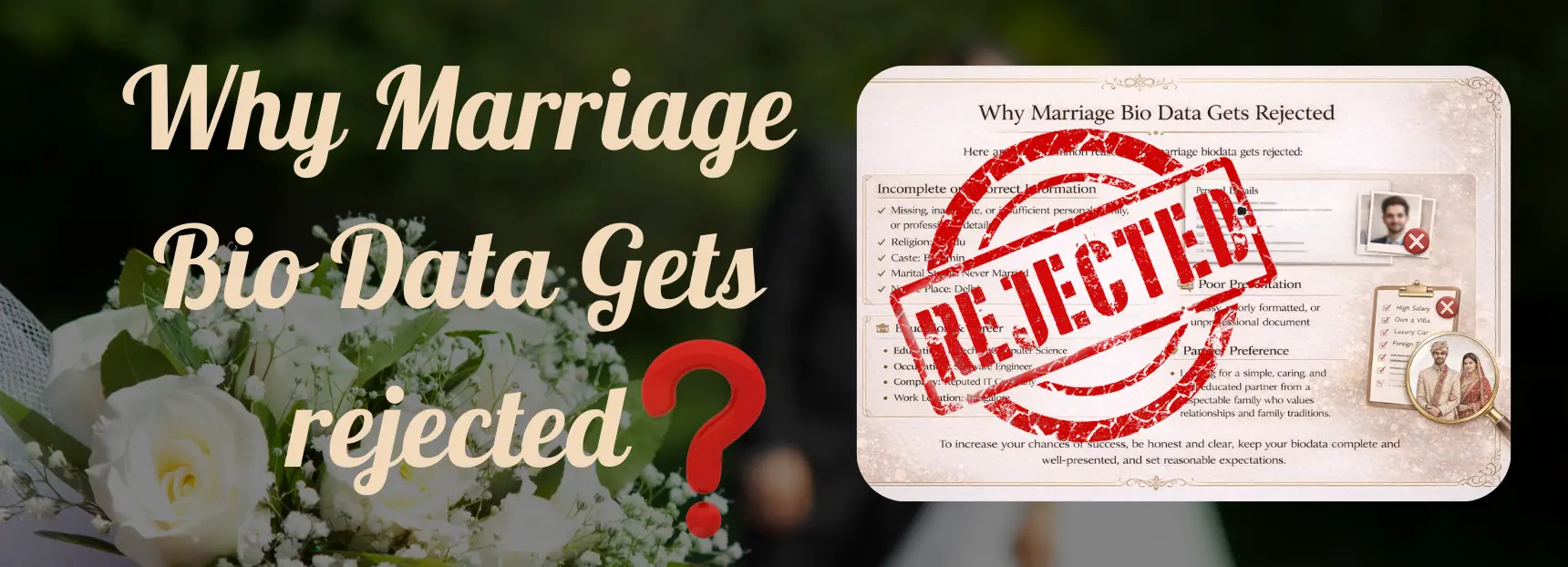
There are many people who wonder why, despite being highly educated, settled, and serious about marriage, their marriage biodata gets rejected by prospective brides/grooms. The reality is the reason for rejection may have less to do with who you are but more with how you present yourself.
Marriage biodata is the first impression of a traditional arranged marriage; therefore, it is critical to create a great first impression so that family members have enough information about you to make a “yes” or “no” decision regarding whether they would like to move forward with a marriage proposal. Even a minor mistake on a marriage biodata can result in family members quietly shutting the door to an opportunity.
We will examine the common reasons that marriage biodata may be rejected and provide solutions for remedying those mistakes.
1. Biodata Looks Unprofessional or Messy
- One of the biggest reasons biodata gets rejected is poor presentation.
- Random fonts, uneven spacing, bad alignment, or handwritten edits make the biodata look careless and rushed.
How to Fix:
- Use a clean, professional biodata template with proper structure.
Your biodata should look calm, organized, and easy to read at first glance.
2. Photo Creates the Wrong Impression
- Photos are often the first thing families notice.
- Blurry pictures, selfies, group photos, heavy filters, or casual outfits create doubt and reduce trust.
How to Fix:
Use a simple, recent, and clear photo with:
- Plain background
- Formal or traditional clothes
- Natural expression
- Good lighting
3. Missing Important Details
Many biodata get rejected because they don’t answer basic questions families look for: Age, height, location, education, job, and family background.
How to Fix:
Always include complete details:
- Personal information
- Family background
- Education
- Career
- Lifestyle
- Contact details
Clarity brings more responses. Confusion brings rejection.
4. Too Much Demanding Partner Preference
When biodata says “must be rich, must earn high salary, must live abroad,” families feel uncomfortable and judged.
How to Fix:
Use soft and respectful language like:
- Preferably
- Ideally
- Looking for someone who…
A polite tone makes your biodata more welcoming.
5. Fake or Exaggerated Information
Wrong age, fake salary, modified height, or inflated job titles may look attractive at first, but they get detected sooner or later.
How to Fix:
- Be honest.
- A genuine marriage match is built on real information, not edited facts.
6. No Family Information
- In Indian marriages, family background is very important.
- When biodata misses family details, trust drops instantly.
How to Fix:
Add:
- Father’s occupation
- Mother’s occupation
- Siblings
- Family values
- Native place
7. Biodata Feels Too Cold or Robotic
Only listing facts makes biodata look emotionless and boring. Families want to feel a connection.
How to Fix:
Add a short personal touch:
- Nature
- Values
- Interests
- Life goals
This small section helps families connect emotionally.
8. Biodata Is Too Long or Boring
Long paragraphs, extra details, and unnecessary information make biodata hard to read.
How to Fix:
Keep it:
- Crisp
- Structured
- Maximum one or two pages
- Easy to scan
9. Outdated Biodata
Old job details, old location, or outdated photos create confusion and doubt.
How to Fix:
- Update your biodata regularly.
- A fresh biodata always gets more interest.
10. Using Resume Instead of Marriage Biodata
Many people use job CV format for marriage biodata, which looks corporate and impersonal.
How to Fix:
Always use a proper marriage biodata format, not a resume layout.
11. Language Issues and Errors
Spelling mistakes, poor grammar, or mixing languages make biodata look careless.
How to Fix:
Use clear, simple language and proofread once before sharing.
12. No Clear Contact Information
If families don’t know how to reach you, they simply move on to the next biodata.
How to Fix:
Always add:
- Contact number
- Email address
- Guardian contact (if preferred)
13. Over-Design or Too Much Styling
Too many colors, icons, or graphics distract readers and reduce seriousness.
How to Fix:
Choose a simple, premium, and minimal design that looks calm and professional.
14. Wrong Template for Community or Region
Using a generic biodata format may not match your community or language preferences.
How to Fix:
Use community-specific biodata templates like: Bengali, Tamil, Odia, Kannada, Hindi, Marathi, Gujarati, etc.
15. Not Using a Trusted Biodata Maker
Manual editing often causes alignment issues, low-quality PDFs, and messy formatting.
How to Fix:
Use a professional Marriage Biodata Maker that gives clean, editable, and print-ready biodata.
Final Note
Most biodata get rejected not because of the person, but because of presentation mistakes. Fixing these small issues can instantly increase responses and improve your chances of finding the right match.
A clean biodata:
- Builds trust
- Creates clarity
- Shows seriousness
- Gets more responses
Quick Checklist Before Sharing Your Biodata
- Clean template
- Clear photo
- Complete details
- Honest information
- Soft partner preference
- Updated biodata
- Proper contact details